

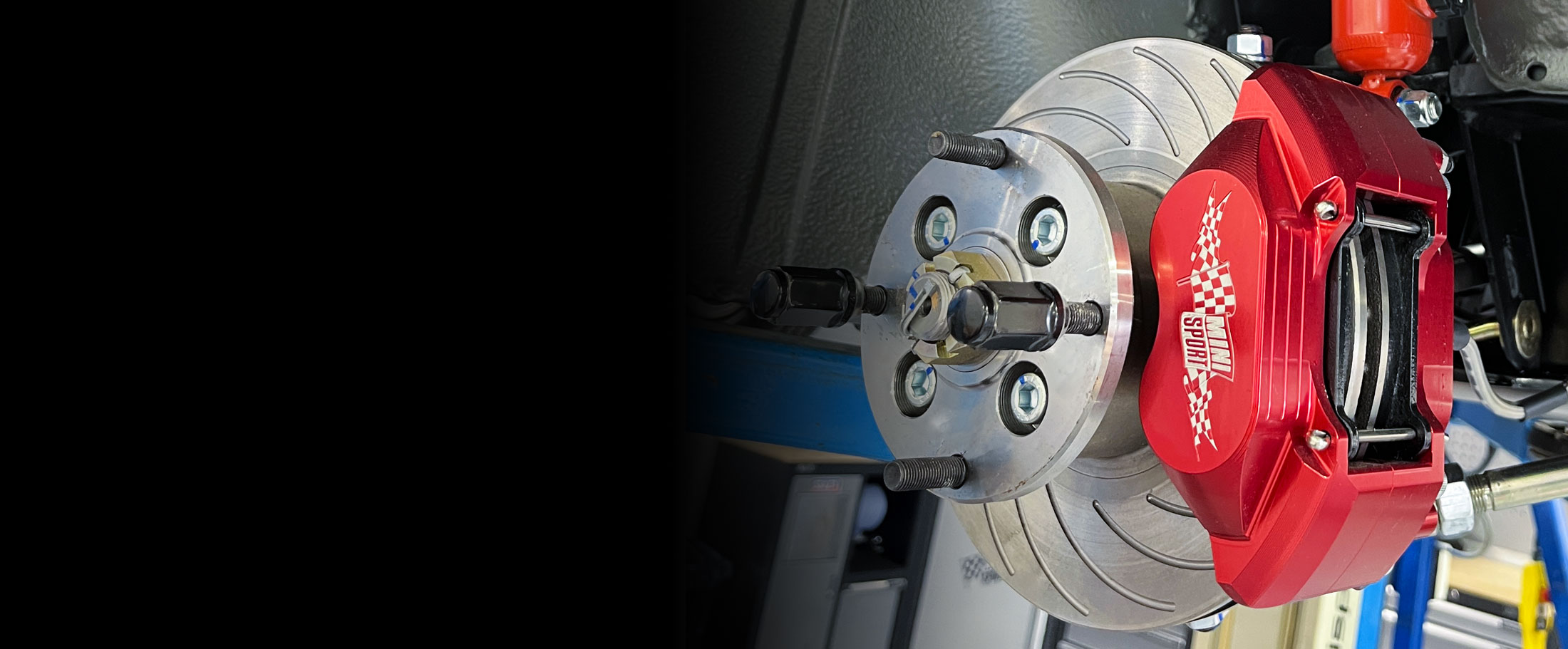
Mini Sport 4-Pot Alloy Brake Calipers
A complete guide to the engineering, fitment and purpose behind Mini Sport 7.5-inch, 7.9-inch vented, 8.4-inch and 8.4-inch vented brake systems — plus the wider Mini Sport range of alloy drums, built brake assemblies and standard Classic Mini braking components.
Better Braking Starts with Balance
A Classic Mini does not automatically need the largest brake package available. It needs a system that balances control, heat management, weight, hydraulic compatibility, wheel clearance and the way the car is actually used.
That is the thinking behind the Mini Sport alloy 4-pot range. The objective is not simply to add more pistons or fit a larger disc for the sake of a specification sheet. Each system has been developed around the physical constraints and distinctive driving character of the Classic Mini. The result is a range that allows owners to retain traditional 10-inch wheels, upgrade later cars on 12- or 13-inch wheels, improve repeated braking performance with vented discs, or reduce front-end weight with a rigid alloy caliper.
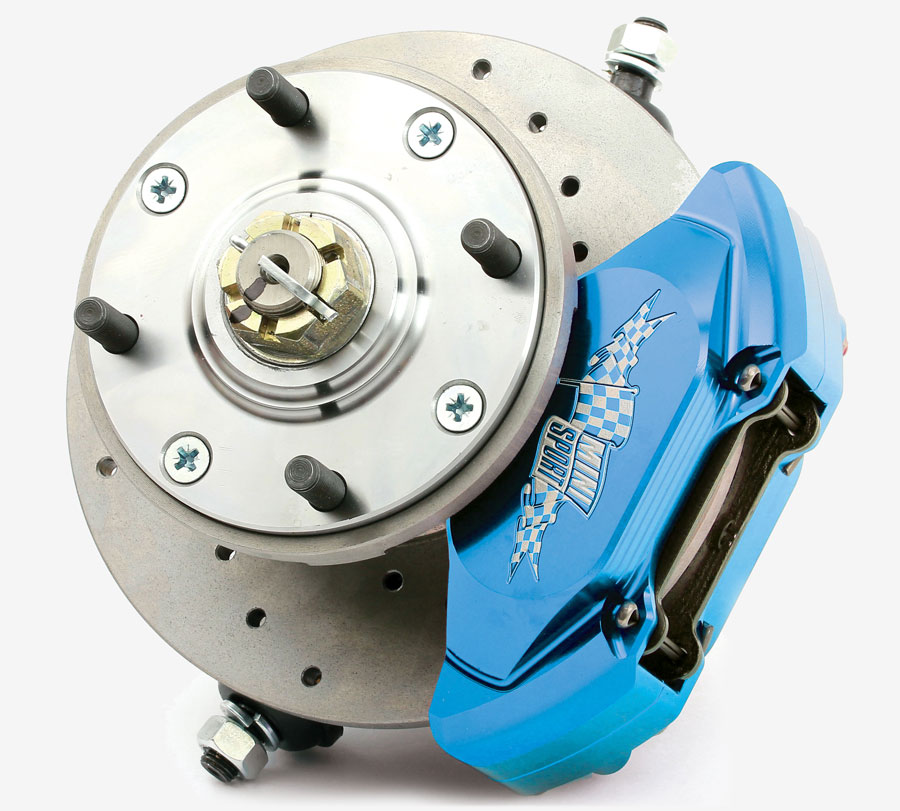
At the centre of every Mini Sport 4-pot system is a caliper CNC-machined from 6082-T6 aluminium billet. Four 35.1mm pistons apply pressure across a wider pad, while the lightweight body reduces mass at the wheel. The systems are available for 7.5-inch solid discs, Mini Sport’s compact 7.9-inch vented arrangement, 8.4-inch solid discs and 8.4-inch vented discs.
Less Mass. More Controlled Pressure.
Mini Sport machines its alloy calipers from 6082-T6 aluminium billet. Aluminium is much less dense than cast iron, making it possible to remove a substantial amount of unsprung weight. But material choice is only part of the story. A brake caliper must also resist opening or flexing when hydraulic pressure rises.
The billet body is designed to combine low weight with rigidity. Reducing caliper movement helps ensure that pedal travel is used to move the pistons and pads rather than deform the caliper body. In practical terms, that supports a firmer, more consistent pedal and clearer feedback when the driver is varying braking pressure.
The four-piston layout changes how pressure reaches the pad. Instead of relying on one larger piston on each side, the Mini Sport caliper uses two pistons per side. This spreads the load across a wider area of the pad, supports the pad more evenly and helps reduce the tendency towards tapered or irregular wear.
Four pistons do not create grip that the tyre cannot use, and piston count alone does not define brake quality. Their value is in control: multiple pressure points, a wider pad and a more stable relationship between the pad, caliper and disc.
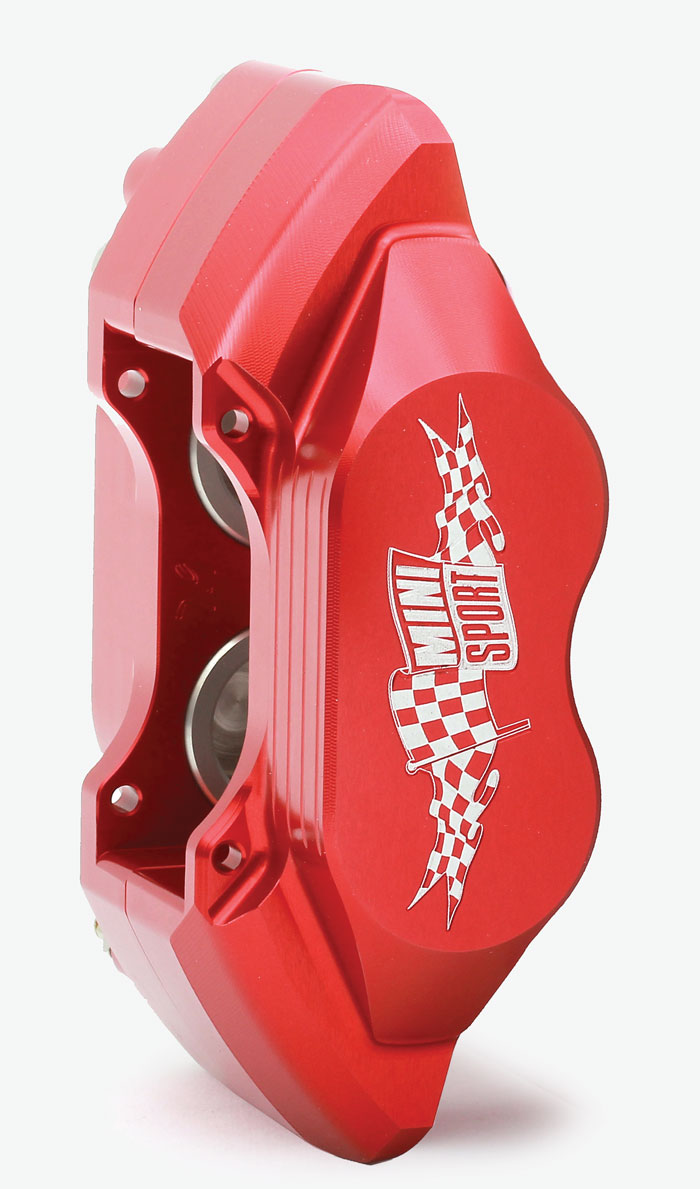
The four 35.1mm pistons provide a calculated total piston area of approximately 3,870mm². That is about 25% greater than the original 7.5-inch two-piston arrangement and within roughly 4% of the standard 8.4-inch system. This places the Mini Sport caliper close to the hydraulic area of the later factory disc brake while gaining the pressure distribution of four smaller pistons.
The caliper also supports a 53mm-wide pad, compared with the 42mm width in the supplied reference measurements for standard 7.5- and 8.4-inch pads. A wider pad does not automatically increase the friction coefficient, but it provides more material volume and a broader platform for the four-piston layout. That can help with pad stability, heat capacity and wear during repeated use.
Lighter Brakes Can Help the Mini Respond
Brake calipers, discs, hubs, wheels and part of the suspension move with the wheel rather than being supported by the body. This is commonly described as unsprung mass. The suspension has to control that mass every time the tyre meets a bump, dip or change in road surface.
Reducing weight at the wheel can help the suspension respond more quickly and keep the tyre following the road surface. On a light, direct car such as a Classic Mini, that can contribute to sharper steering response, better control over uneven roads and a more settled ride.
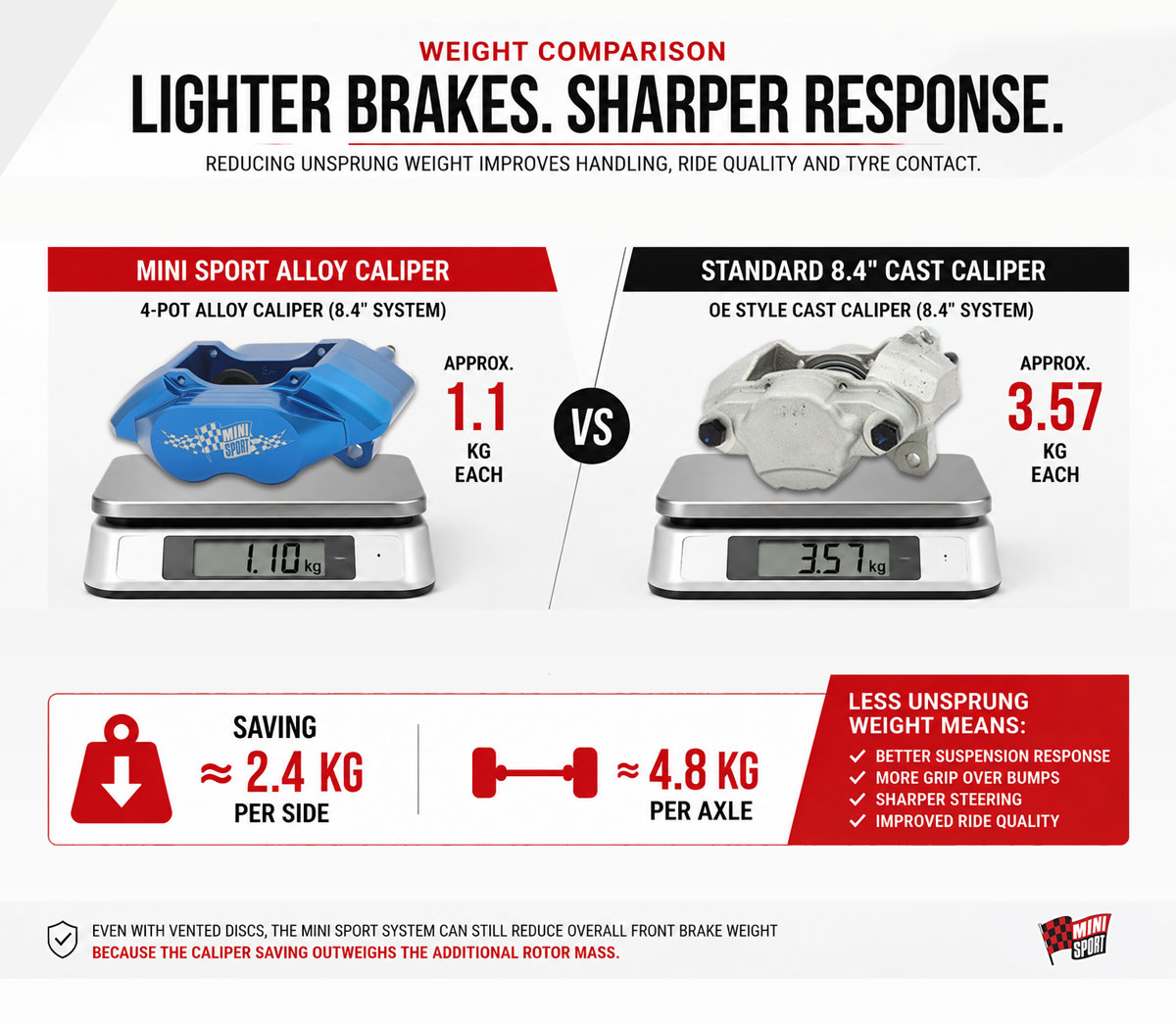
A representative Mini Sport alloy caliper weighs approximately 1.1kg, compared with approximately 3.57kg for the referenced standard 8.4-inch cast caliper. That is a difference of about 2.4kg per side, or approximately 4.8kg across the front axle before disc choice and other components are considered.
Vented discs are heavier than equivalent solid discs because they contain two friction faces and internal cooling vanes. Even so, the reduction achieved by the alloy calipers can offset much of that increase. Based on the supplied component data, an alloy 8.4-inch solid-disc package is approximately 36% lighter than the compared standard package, while an alloy 8.4-inch vented package remains approximately 22% lighter.
Disc Size Changes Leverage, Heat Capacity and Fitment
A larger disc increases the effective radius at which the pad acts. A vented disc increases the amount of material available to absorb heat and creates an internal air path to help release it. Both can improve performance, but both must fit within the available wheel and carry an acceptable weight penalty.
The 7.5-inch solid disc is the traditional compact Cooper S-style arrangement for compatible 10-inch wheels. Moving to 7.9 inches increases the disc radius by approximately 5.3%, creating more mechanical leverage while still allowing Mini Sport to package a vented disc beneath most compatible 10-inch alloy wheels. Moving from 7.9 to 8.4 inches adds a further approximate 6.3% in radius, but normally requires 12- or 13-inch wheels.
Mini Sport’s 7.9- and 8.4-inch vented discs are specified at 20.75mm thick with 36 internal vanes and 16 grooves. The internal vanes create airflow through the centre of the disc, while the additional material increases thermal capacity. Their main advantage is not simply one hard stop. It is the ability to absorb and release more heat during repeated braking, helping the pedal and braking response remain more consistent on demanding roads, track sessions, rallies, sprints and hillclimbs.
| Disc | Type | Thickness | Approx. mass each | Purpose |
|---|---|---|---|---|
| 7.5-inch standard | Solid | 9.47mm | 2.75kg | Traditional compact 10-inch-wheel package |
| 7.5-inch drilled | Solid | 9.47mm | 2.68kg | Alternative solid-disc specification |
| 7.9-inch grooved | Vented, 36 vanes, 16 grooves | 20.75mm | 3.21kg | Vented performance beneath compatible 10-inch wheels |
| 8.4-inch standard | Solid | 9.67mm | 2.81kg | Later Mini road and restoration applications |
| 8.4-inch drilled and grooved | Solid | 9.67mm | 2.75kg | Performance-oriented solid-disc option |
| 8.4-inch grooved | Vented, 36 vanes, 16 grooves | 20.75mm | 3.68kg | Maximum thermal capacity within the conventional range |
Choose the Right System For Your Mini
Wheel size is the first filter, but it is not the only one. Consider the internal wheel profile, present hub and disc arrangement, intended use, expected heat load and whether preserving the traditional character of the car is a priority.
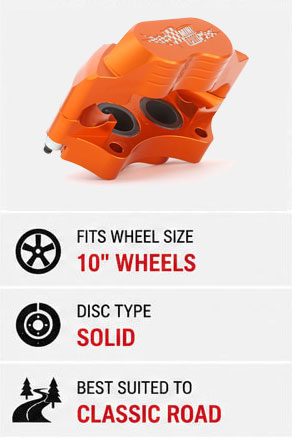
7.5-inch Alloy 4-Pot
The 7.5-inch option is designed around the traditional Cooper S-style solid-disc arrangement. It retains the compact package associated with compatible 10-inch wheels while replacing the heavy cast caliper with a rigid, lightweight four-piston design.
It is a strong choice for classic road cars, period-style builds and restorations where wheel size, appearance and steering character matter as much as outright thermal capacity.
View 7.5-inch Calipers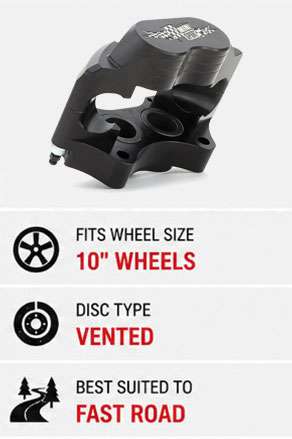
7.9-inch Vented Alloy 4-Pot
The 7.9-inch system was created to answer a very Mini-specific engineering question: how can a vented brake package be fitted beneath most compatible 10-inch alloy wheels?
Its 200.66mm vented disc offers more leverage than the 7.5-inch arrangement, plus the thermal capacity and internal cooling of a 20.75mm vented rotor. It is particularly well suited to fast-road, rally-inspired and competition-focused Minis that must retain 10-inch wheels.
View 7.9-inch Calipers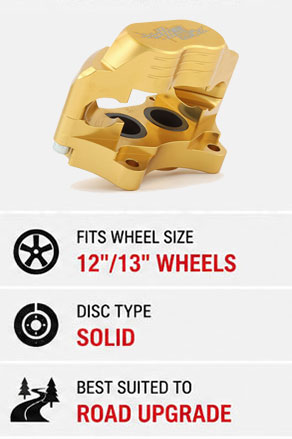
8.4-inch Alloy 4-Pot
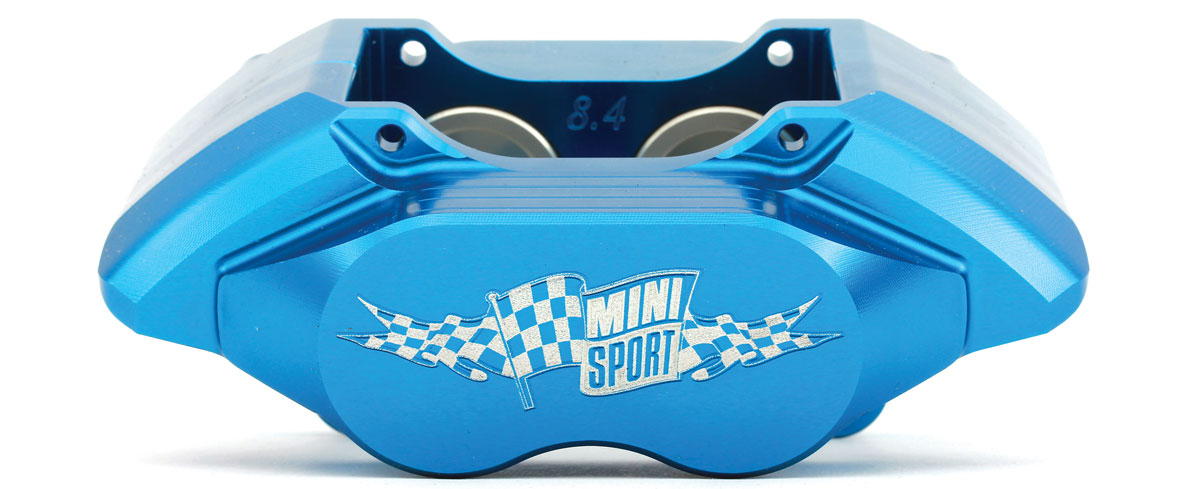
The 8.4-inch solid-disc system suits later Minis and upgraded cars using compatible 12- or 13-inch wheels. It retains the familiar solid disc while replacing the standard cast caliper with the lightweight Mini Sport four-piston body.
This is a natural road upgrade where reduced unsprung weight, wider pad support and more even pressure distribution are the priorities, without adding the mass or cost of a vented disc.
View 8.4-inch Calipers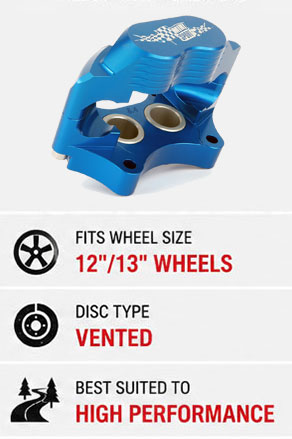
8.4-inch Vented Alloy 4-Pot
The 8.4-inch vented system combines the greatest disc radius in the conventional range with the heat capacity of a 20.75mm vented rotor.
It is intended for high-performance road cars, track use and competition Minis that experience repeated heavy braking. Its advantage is thermal consistency, especially where the vehicle has the wheel clearance and performance to make use of the larger package.
View 8.4-inch Vented Calipers
5 Anodised Options

Repeatability Matters More Than One Big Stop
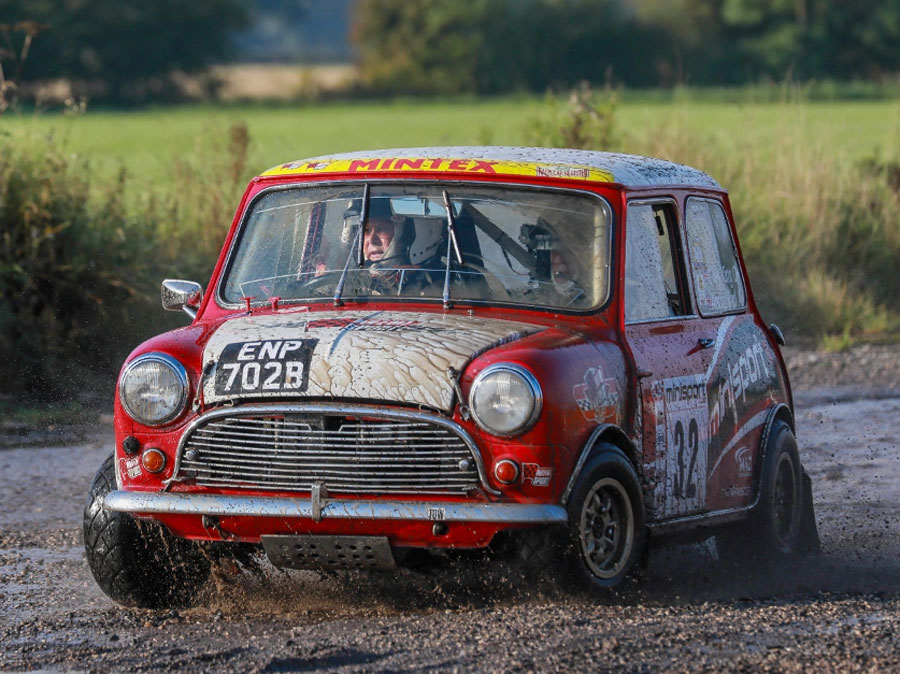
Mini Sport brake systems have been used and tested across racing, rallying, sprinting and hillclimbing. These disciplines place different demands on a brake system, but they share the same need for control and repeatability.
Competition drivers need a pedal that communicates clearly, pads that remain properly supported and discs that manage repeated heat cycles. They also value low unsprung weight because every reduction at the wheel can assist suspension response and directional control.
For road owners, the same engineering principles matter even when the car is not competing. A fast-road Mini descending a long hill, a touring car carrying luggage or a powerful engine conversion can create repeated brake temperatures that a basic system was never expected to manage. The correct Mini Sport system provides a way to select the level of heat capacity and wheel fitment required without automatically choosing the largest option.
Four Competition Priorities
- Consistency: thermal capacity and cooling during repeated braking.
- Control: rigid caliper construction and progressive modulation.
- Durability: high-temperature seals and proven use in demanding disciplines.
- Weight: less unsprung mass at the front axle.
Cooper, Paddy Hopkirk and Mini ‘R’
Mini Sport also offers distinctive brake packages connected with some of the most important names and ideas in Mini performance.
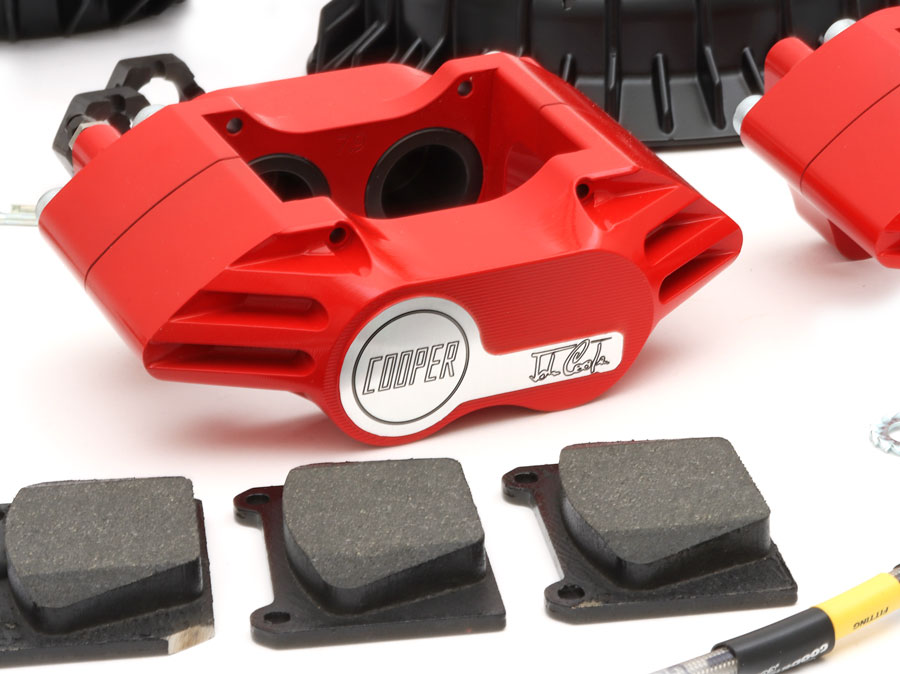
Cooper Brake Systems
Cooper-branded versions combine Mini Sport’s caliper engineering with a finish and specification developed for customers who want braking performance connected to the Mini’s most recognisable performance heritage. Source notes identify anodised aluminium pistons, stainless-steel bolts and a high-temperature coating on relevant Cooper versions.
Explore Cooper Brakes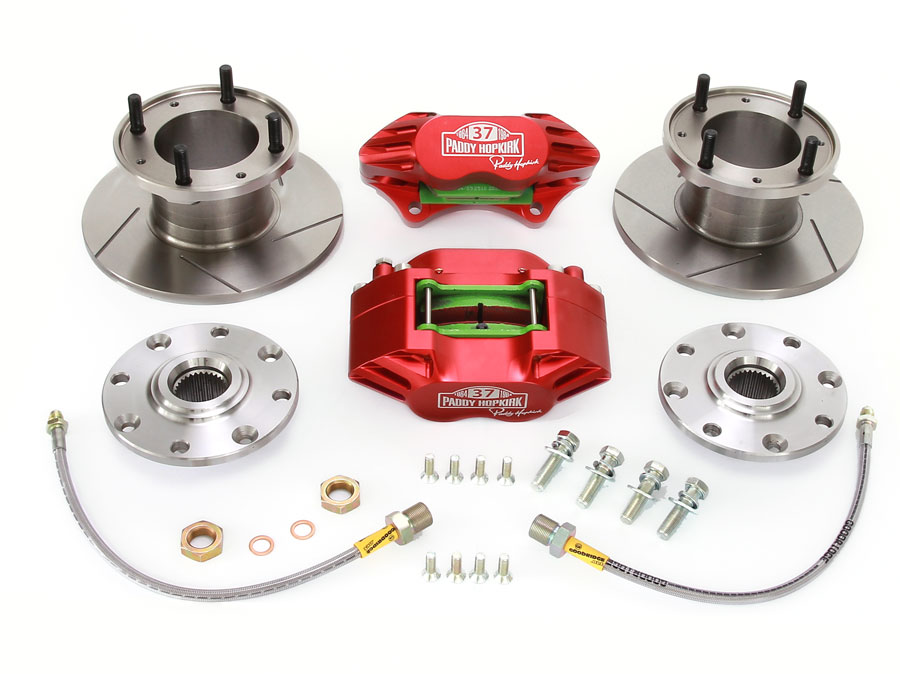
Paddy Hopkirk Brake Systems
Paddy Hopkirk brake packages connect modern Mini Sport braking components with one of the Mini’s defining competition stories. They offer owners a distinctive route into an upgraded system while keeping the product relevant to the car’s rally heritage.
Explore Paddy Hopkirk Brakes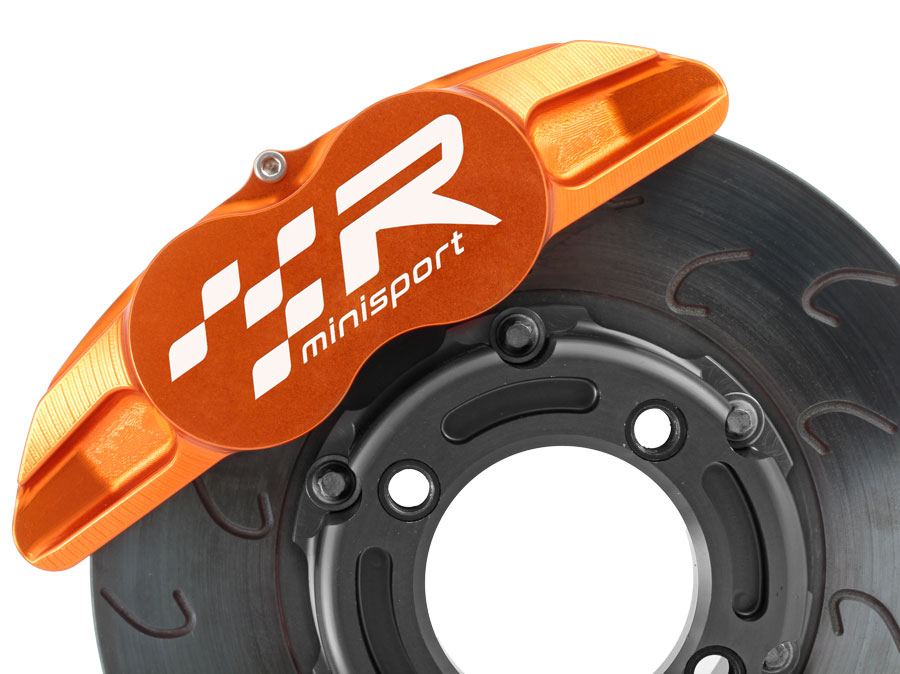
Mini ‘R’ Brake Range
The Mini ‘R’ range represents Mini Sport’s performance-led approach to complete vehicle development. Its brake packages should be presented as part of a wider engineered system rather than as an isolated styling change.
Explore Mini ‘R’ BrakesPrepared to Save Time and Reduce Uncertainty
Not every owner wants to source, identify and assemble every brake component individually. Mini Sport’s built brake assemblies bring the relevant components together in a prepared package, helping restorers, workshops and home builders start with a known assembly rather than a box of unrelated parts.
The range includes assembled front disc-brake packages and fully built drum-brake backplate assemblies. Depending on the product, assemblies may bring together hubs, discs, calipers, bearings, drive flanges, backplates, cylinders, shoes, springs and adjusters.
The value is not merely convenience. Correct component matching matters on a Classic Mini because specifications changed over the production life of the car and many vehicles have been modified since leaving the factory. A prepared assembly can reduce identification errors, shorten workshop time and give the customer a clearer route from an incomplete or worn system to a dependable replacement.
Final installation must still be completed correctly, with all fixings, hydraulic connections, clearances and settings checked. Brake work is safety-critical and should be carried out by a competent person using the appropriate workshop information.
Built by: Chris Catterall – Component Build Technician
Quality checked: Mini Sport Workshop
Lightweight Rear Braking with Improved Heat Dissipation
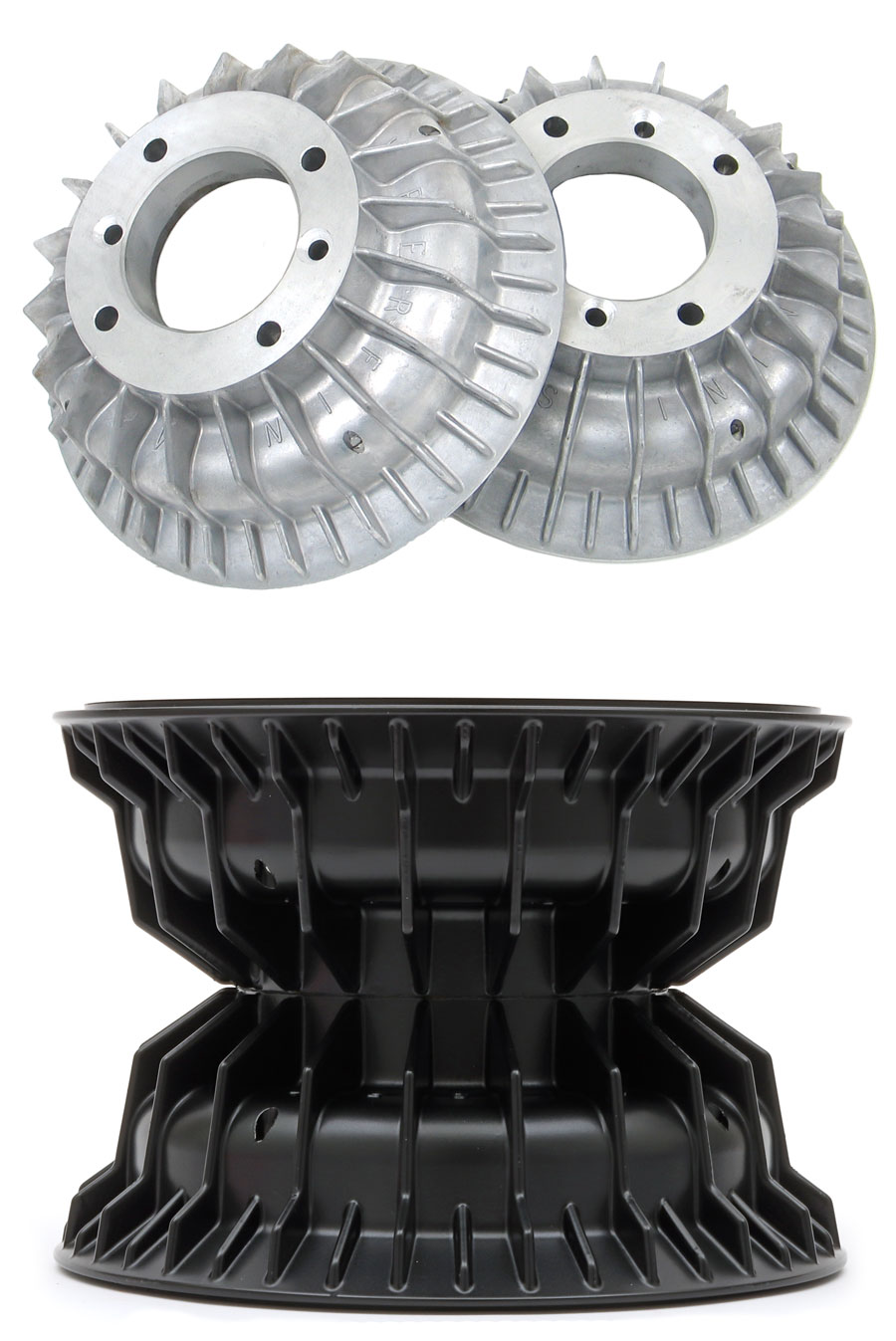
The same focus on weight and thermal control extends beyond the front calipers. Mini Sport Superfin alloy brake drums use an aluminium body with a steel braking liner, bringing together a durable friction surface and a substantially lighter outer structure.
External fins increase surface area and help the drum release heat to the surrounding air. The aluminium construction reduces rotating and unsprung mass compared with a conventional cast-iron drum, while the steel liner provides the working surface required by the brake shoes.
For road cars, restored Minis and performance builds, Superfins offer a way to improve the rear assembly without abandoning the proven drum-brake layout. They are particularly relevant when the front of the car has already received a lightweight alloy-caliper system and the owner wants the rear components to follow the same engineering philosophy.
Rear brakes must remain correctly matched to the front system, wheel cylinders, shoes, hydraulic layout and vehicle use. Superfin drums are part of a complete rear-brake solution, not a substitute for correct adjustment or sound hydraulic components.
The Complete Mini Sport Brake Range
A dependable Mini brake system is built from compatible, serviceable components. Mini Sport supports everything from original drum-brake restorations to complete vented 4-pot conversions.
Standard Brakes and Restoration Parts
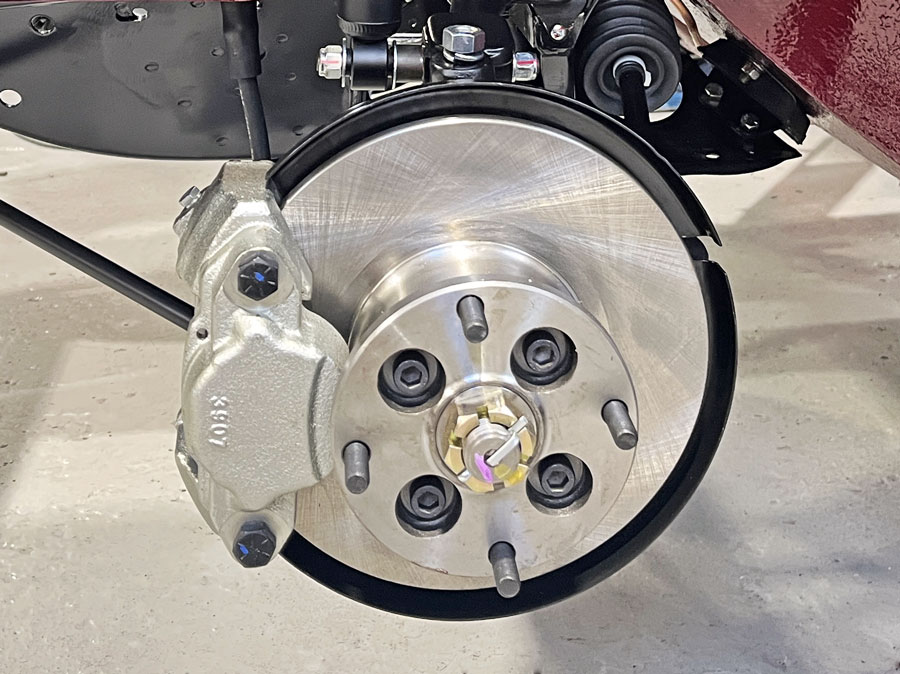
Standard calipers, solid discs, drums, shoes, pads, wheel cylinders, master cylinders, servos, hoses, pipes, adjusters, springs and fittings for maintaining or restoring factory-type systems.
Shop Standard Brakes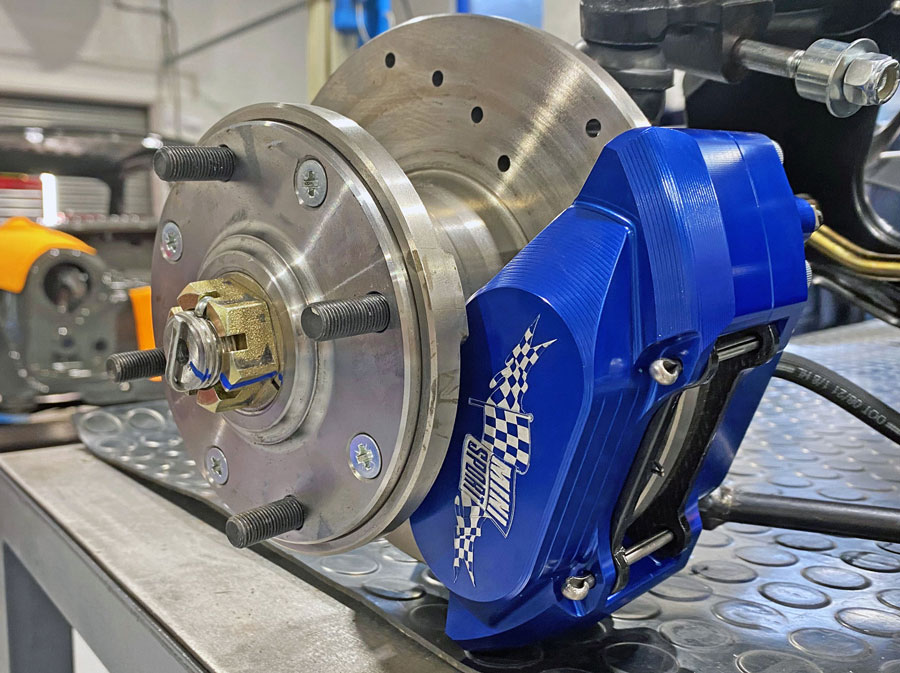
Mini Sport Brake Kits
Curated packages designed to bring the principal conversion or replacement components together. Kits help customers choose a coherent system rather than mixing parts without a clear specification.
Shop Mini Sport Brake Kits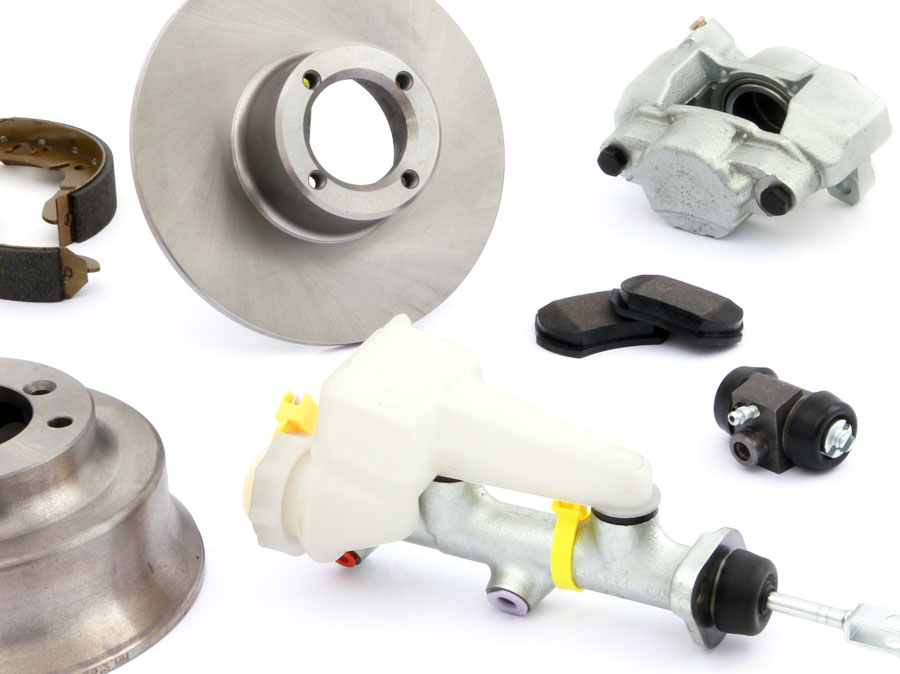
Supporting Components
Brake performance depends on more than the caliper and disc. Correct pads, hoses, fluid, cylinders, bearings, drive flanges, hubs and rear-brake condition all influence the finished result.
Explore All Brake PartsEverything You Need, Engineered by Mini Sport
From performance alloy brake calipers and vented brake systems to Superfin alloy brake drums and fully built brake assemblies, Mini Sport has developed a complete range of braking components for the Classic Mini. Whether you're carrying out routine maintenance, restoring an original car or building a high-performance road or competition Mini, you'll find components engineered to work together for dependable, confidence-inspiring braking.
Identify the Car, Wheels and Present Brake System
1. Check the Wheel
Record wheel diameter, manufacturer, model, width and offset. The internal profile is essential; two wheels with the same nominal diameter can provide very different caliper clearance.
2. Check the Existing Parts
Identify the current disc diameter, hub type, drive flange, caliper, hydraulic arrangement and rear-brake specification. Do not assume the car still has its original system.
3. Define the Use
A standard road restoration, powerful fast-road car, rally build and circuit Mini do not create the same heat load. Choose the package that suits the real use of the vehicle.
When contacting Mini Sport, provide the vehicle year, wheel details, current brake arrangement, intended use and clear photographs. This allows the team to advise on compatibility more accurately and helps avoid unnecessary changes.
Mini Sport Alloy Brake Caliper FAQs
Are four-piston calipers always better than two-piston calipers?
No. A well-designed two-piston caliper can be entirely suitable for its application. Mini Sport uses four pistons to distribute pressure across a wider pad, improve pad support and provide a controlled package within Classic Mini wheel constraints.
Will 7.9-inch vented brakes fit every 10-inch wheel?
No. The system is intended to fit beneath most compatible 10-inch alloy wheels, but spoke shape, barrel profile and offset vary. Confirm clearance with a template or with Mini Sport before purchase.
Why not fit 8.4-inch vented brakes to every Mini?
The 8.4-inch vented package offers greater disc radius and heat capacity, but normally requires 12- or 13-inch wheels and carries more disc mass. For a 10-inch-wheel car, the 7.9-inch vented system may provide a better balance of fitment, weight and thermal performance.
Do alloy calipers reduce stopping distance?
They can improve control, consistency and system response, but stopping distance depends on tyre grip, road surface, brake balance, pad compound, disc condition, hydraulic condition and driver input. It is more accurate to describe the calipers in terms of pressure distribution, stiffness, modulation and weight.
What is the benefit of a vented disc?
A vented disc has two friction faces separated by internal vanes. The additional material absorbs more heat and the vanes help move air through the disc, improving consistency during repeated braking.
Why choose a Mini Sport-built assembly?
A built assembly can save identification and assembly time by combining compatible components into a prepared package. It is particularly useful for restorations, workshops and cars with incomplete or badly worn systems.
What are Superfin alloy brake drums?
Superfins combine an aluminium finned body with a steel braking liner. They reduce mass and increase external surface area while retaining the conventional rear drum-brake layout.
Should brake upgrades be fitted professionally?
Brake work is safety-critical. Installation, bleeding, clearances, fastener torque, hydraulic compatibility and road testing must all be completed correctly. Use a competent technician when the work is beyond your experience or equipment.